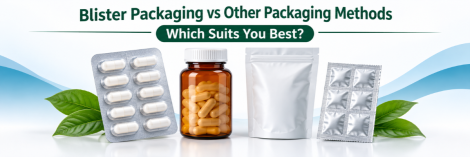

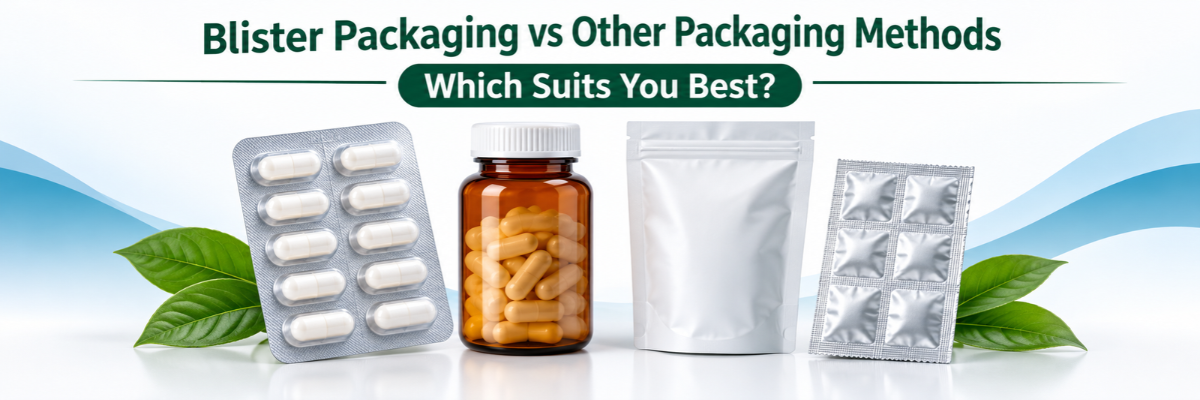
In a world where product presentation, convenience, shelf-life and cost all matter, choosing the right packaging method becomes a strategic decision rather than simply a functional one. For dietary supplements and consumer goods alike, the packaging you choose can influence not only how the product is perceived, but also how well it arrives at the customer and how well it holds up in transit, on shelf, and in use. One method that’s increasingly popular is blister packaging — and yet it’s far from the only option. So, what do you gain (or lose) when you pick blister packaging versus other formats like bottles, pouches, sachets or strip-packs? Which option truly “suits you best”? Let’s dive in.
What is Blister Packaging?
Before comparing, we need to define what blister packaging is. According to PureNSM:
“Blister-packed supplements are lightweight, compact, and highly portable… provide superior protection from moisture, light, and air… sleek, medical-grade look…”
In general packaging-industry terms, a blister pack consists of a pre-formed plastic (or sometimes foil/laminate) cavity or pocket that holds a product (e.g., a tablet or capsule) and is sealed with a backing material (paperboard, foil, plastic film). For example, in the nutraceutical industry:
“Blister packs provide excellent barriers against oxygen, humidity and light — essential for maintaining product efficacy and extending shelf life.” In other words, the blister format offers both functional protection and marketing/consumer-convenience benefits. PureNSM emphasizes benefits like travel-friendly size, compactness and “professional presentation.”
Other Common Packaging Methods: A Quick Overview
To compare effectively, let’s outline some of the other packaging methods frequently used in similar product categories:
- Bottles (rigid plastic or glass containers with screw or snap caps): Common for tablets, capsules, softgels, liquids.
- Pouches / Sachets (flexible film packaging, sometimes with re-sealable zippers): Often used for powders, single serve, travel size.
- Strip packs (a continuous strip of film or foil with individual doses sealed within, often peeled or torn off): Frequently used in pharma for unit-dose.
- Cartons / Boxes with inner trays: Secondary packaging around primary containers.
- Other formats (clamshells, tubs, jars, etc) but for comparison purposes, we’ll focus on the main ones above.
Each method has its own trade-offs in terms of cost, convenience, protection, branding, sustainability and supply chain fit.
Blister Packaging: Key Advantages
Let’s explore the strengths of blister packaging — both those highlighted by PureNSM and those supported more broadly by industry sources.
1. Protection from Environmental Factors
From PureNSM:
“Blister packs provide superior protection from moisture, light, and air…”
From other sources:
“Blister packs provide excellent barriers against oxygen, humidity, and light … especially important for nutraceuticals, where active ingredients such as vitamins and probiotics are often sensitive.”
In practical terms, this means blister packs help preserve product integrity, reduce degradation risk and extend shelf life compared to formats where the product is more exposed or volume-based.
2. Convenient, Travel-Friendly, Single-Dose Format
Again, from PureNSM:
“Ease of Travel: Blister-packed supplements are lightweight, compact, and highly portable…”
Because blister packs often package individual doses or units in a flat, compact sheet or card, they are easy for consumers to carry and easy to dispense one at a time, reducing waste or over-handling.
3. Enhanced Presentation & Branding
PureNSM emphasises “Professional Presentation: The sleek, medical-grade look of blister packs enhances the perceived quality and trustworthiness of your products.”
Blister packs can give a premium feel and often allow individual cavity printing, foil sealing, and a clean visual of the product, which can boost confidence.
4. Tamper-evidence & Dose Accuracy
Industry sources note that blister packaging can produce visible tamper evidence (each dose sealed) and help with dosage tracking (one unit per cavity). For certain product types that can matter for regulatory, safety or customer trust reasons.
5. Reduced Product Waste / Better Shelf Stability
Because each unit is individually sealed, once one dose is removed, the remaining doses can remain sealed and undisturbed, improving stability and reducing exposure to repeated opening/closing.
Blister Packaging: Key Limitations
While blister packaging offers many benefits, there are significant trade-offs to consider.
1. Higher Cost & Complexity
Several sources point to the increased manufacturing cost, materials cost and equipment complexity for blister packaging. For example, Blister packaging generally involves a more complex manufacturing process compared to strip packaging, which can result in higher production costs. Also, the need for thermoforming, blister cavity design, precise sealing etc adds up.
2. Environmental / Sustainability Challenges
Flexible/rigid composite blister materials (plastic + foil laminates) can make recycling difficult. One article notes: “Aluminum-plastic blister packs are not only hygienic but also effectively prevent moisture and air … Disadvantages … are not as environmentally friendly, often requiring composite materials, aluminium foil that are hard to recycle.”
For brands with sustainability goals, this may be a major consideration.
3. Less Flexibility in Format & Volume
Some formats (especially flexible packaging) allow for large volume, flexible shapes, etc — blisters may restrict you in certain product shapes or sizes.
From one comparison: “Unlike strip packaging … blister packaging offers limited flexibility once sealed, making customization challenging for unique medication shapes or larger dimensions.” – Green Kites Vietnam
Also for consumers with reduced dexterity, pushing tablets out of a cavity may be more difficult than unscrewing a bottle.
4. Consumer Handling Considerations
While convenient in many ways, blister packs may pose a challenge for some user demographics (elderly, users with arthritis) who may require easier access. Some sources highlight this.
Comparison Between Blister Packaging vs Other Formats
Let’s compare blister packaging head-to-head against the alternatives across relevant dimensions.
From this comparison, you can see that blister packaging shines when the product is a solid dose (tablet/capsule) that needs to be protected, where single-serve or unit-dose convenience is a plus, and where premium presentation matters. Conversely, bottles, pouches or strip packs may make more sense when cost, volume, flexibility or sustainability are higher priorities.
When Blister Packaging “Suits You Best”
Given the above, here are scenarios where blister packaging is likely the best fit:
- Your product is a tablet or capsule (solid dose) that is sensitive to moisture, air or light (e.g., vitamins, probiotics, high-precision supplements). The barrier advantages of blister packaging become meaningful.
- You want to offer a premium presentation and convey a “medical/clinical grade” look or value premium. As PureNSM notes: “professional presentation … enhances perceived quality and trustworthiness.” purensm.com
- You want to facilitate travel-friendly packaging, portability, and convenience for the consumer (e.g., daily pick-up dose, single serve, on-the-go).
- Your brand can absorb or justify the higher packaging cost and complexity because the added protection, branding, convenience or perceived value offsets it.
- You are targeting a market where individual dose control, tamper evidence and hygiene (sealed units) matter.
- The product shape/size is well suited to blister cavity design.
Under those conditions, blister packaging is a highly compelling choice.
When Other Methods May Be Better
Conversely, you might choose not to go with blister packaging — and instead select bottles, pouches or strip packs — when:
- Your product is a powder, large-format capsule or softgel, or a liquid, which doesn’t lend itself as well to blister cavities.
- Your cost constraints are tight and the packaging cost needs to be minimized.
- You are packaging a volume give-away, bulk supply, or value offering where premium presentation is less critical.
- Your brand has a strong sustainability mandate and the composite materials used in blister packs (film + foil) are a concern.
- The consumer demographic requires simpler opening (for example, older adults who may struggle with push-through blister packs).
- Your product dispenses multiple doses at once (rather than a single unit) or you need a bulk supply for home use rather than travel or on-the-go.
In those cases, bottles or flexible pouches (for powders) may be better aligned to your supply chain, cost structure and consumer use-case.
Example Scenario Walk-through
For illustration, let’s run through two hypothetical product scenarios to show how this decision might play out:
Scenario A: A premium vitamin brand launching a high-potency capsule with moisture-sensitive ingredients. They target frequent travellers and want a sleek, clinically-oriented look.
- Product format: capsule (solid dose) → well suited to blister.
- Use-case: travel/on-the-go, single-serve → blister is convenient.
- Brand: premium, premium packaging cost acceptable.
- Shelf-life: sensitive ingredients → blister’s barrier is beneficial.
- Sustainability: Brand acknowledges some trade-off for premium look and protection.
Conclusion: Blister packaging is likely the best choice.
Scenario B: A value-oriented green powder supplement sold in large tubs for home use. Consumers scoop daily, cost control is key, and packaging reuse or recycling is part of the brand story.
- Product format: powder → blister infeasible.
- Use-case: large home use, many servings → bottle/tub makes sense.
- Brand: value oriented, cost sensitive.
- Sustainability: brand emphasises reusable or recyclable tub.
Conclusion: A bottle or tub would be the more appropriate choice here.
Conclusions
Choosing the right packaging method is not just a logistic decision — it’s a strategic one. The decision between blister packaging and other methods (bottles, pouches, strip-packs) depends on a blend of product format, consumer use case, brand positioning, cost structure, manufacturing capability and sustainability priorities.
Blister packaging offers compelling advantages: excellent protection for sensitive products, strong visual/branding presence, portability and unit-dose convenience. As the article from PureNSM underlines, it helps “elevate your product” with enhanced convenience, protection and presentation. However, these benefits come with trade-offs — higher cost, more complex manufacturing, and environmental/recycling challenges. By carefully weighing the factors and matching them to your product and brand strategy, you can choose the format that “suits you best.”
In short: If you are focused on tablets/capsules, have a premium positioning, need high barrier protection and want to engage mobility/portability, blister packaging is a strong candidate. If instead you prioritize cost, flexibility, sustainability, or are packaging powders/liquids or large-volume servings, the alternatives may be more appropriate.
What to Do Next
If you’re evaluating packaging for your next product launch or relaunch:
- Conduct a packaging audit: define your product format, servings, dose size, portability needs, barrier requirements.
- Map your consumer journey: how is the product used? Where? How often? What packaging will fit that behaviour?
- Align with your brand strategy: is premium presentation a key differentiator? Or is value/low cost more important?
- Request packaging quotes (blister, bottle, pouch) and compare cost vs benefit.
- Incorporate long-term considerations: shelf-life, regulatory/tamper requirements, sustainability commitments.
- If considering blister packaging, look for a specialist provider (such as PureNSM) that offers automatic blister packing machines, compliance with good manufacturing practice (GMP) standards, and the needed tooling.
Final Thoughts
Packaging is often the last frontier where product meets consumer — it is simultaneously functional (protecting the product) and emotional (shaping consumer perception). Blister packaging is a powerful tool in that interface, especially when used purposefully. But as with all tools, it must be used in the right context. The right choice is not simply “what everyone else uses,” but “what your product, brand and consumer need.”
In the end: ask the right questions, understand the trade-offs, and make an informed decision. That way your packaging will not just hold the product, but support your brand story, consumer experience and business goals — and you’ll know which packaging method truly suits you best.